≡ Menu
A game called Dominion has taught me lessons about my own less ambitious life.

I haven’t learned as much as I could have from my lifelong fascination with games.

If I’d been paying attention to how I win at Monopoly for example – remortgage aggressively, buy the mid-priced, well-placed orange squares, and then build, build, build – then I might have profited from last decade’s property boom.

Alas, I have just confirmed another 12 months with my landlord, and I stubbornly refuse to deploy money into what I still see as a precariously priced London housing market.

Another example: I’m awful at chess.

I know the rules of chess, obviously. And I’ve been beaten enough times to get the tactical general gist.

But I struggle to sacrifice pieces to win a checkmate. Instead, I guard everything defensively, until being ripped apart by a couple of knights or a rampaging queen. I don’t think far ahead enough, either.

Here I see echoes of mistakes I’ve made when stock-picking – both in being too cautious about the sort of companies I’ll consider (particularly with growth opportunities) and also jumping to assume a speedy reversion to the mean, instead of foreseeing protracted multi-year downturns.

I’m alert to these tendencies now, but I’m sure I’m not cured of them.

Mirror, mirror, on the board

For good or ill, I tend to play Settlers of Catan the same way I invest – opportunistically.

Most of my friends are one-trick ponies when approaching this game of trading and land grabbing, but I’m pleasingly flexible with my tactics.

Unlike in real-life investing, there are no turnover costs to worry about in Settlers of Catan, so I churn my resources continually to try to give myself options. Doing so tends to beat waiting around for the right cards to show up.

Similarly, I try to be alert to the changing landscape in my real-life investing, and to take advantage of being a private – and hence nimble – investor.

I was even selling physical possessions in March 2009 to buy all the equities I could, for instance. And in the last few years I’ve attempted to turn the illiquidity of current markets to my advantage by trading overlooked or reviled small cap shares, to mixed but overall profitable ends.

I think most people are best passively investing, but the reason my co-blogger writes about it now is because I’ve been ever more active over the past 3-4 years.

I’ve even been experimenting with stagging retail bonds, despite my lack of enthusiasm for fixed income versus equities on current valuations.

New system – maybe new opportunities.

Enter Dominion

We shouldn’t take these colourful metaphors entirely seriously.

Indeed, I suspect one of the reasons why people fail when they actively invest 1 is because they clutch to metaphors and narrative fallacies, most of which are contradictory.

Should you “be greedy when others are fearful” or ought you “never catch a falling knife”? Either way, if you do make a profit should you “run your winners and cut your losers” – despite the warning that “nobody ever went broke banking a profit”?

Pick your homily and make your choice.

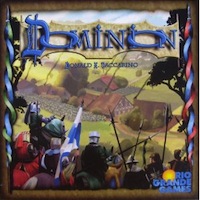
That caveat aside, I believe I’ve genuinely learned something about myself in the past few months through playing a card game called Dominion.

It’s another one I keep losing at, and after some introspection I think I know why.

And it’s a little scary what I think it could be teaching me about my attitude to money – and my life.

Dominion: A bluffer’s guide

I’m guessing that you probably haven’t played Dominion. So before revealing what I’ve learned about investing and money from repeatedly losing at it, I’d best explain how it works. 2

Dominion is a card-based game, but they’re not the cards you’ll be familiar with from your late night strip poker sessions.

Rather these are the sort of theme-based cards that you might have seen hairy teenagers touting at each other when playing the cult classic game Magic the Gathering and the like.

In the most basic version of Dominion 3, cards come in three kinds: Treasure, Action, and Victory cards.

These cards all relate to the medieval back story of the game – so Thief cards enable you to steal from other players, for example, while the Mine card enables you to add to your Treasure pile.

Here’s a few examples: Two Action cards, a Treasure card, and a Victory card:

The only way to win is by having the most Victory points when the game ends. Players take turns to use their cards to achieve this goal.

A turn consists of:

  • Drawing a new hand of cards from the top of your deck.
  • An action phase, where you can use the action cards drawn to do things such as manipulate your card deck, gain new cards, or attack other players.
  • A buying phase, where you can use any Treasure cards in your deck to buy more cards – Action cards, Treasure cards, or Victory cards.
  • Finally, discarding all the cards from your turn to a cast-off pile, where they sit until you’ve worked through your deck, at which point you shuffle them all and redraw.

On the face of it this might not sound like it relates much to investing – let alone your financial life-cycle.

But it does!

Card-carrying realist

Leaving aside the colourful specifics of the Dominion cards – Woodcutters, Feasts, Coins, Estates, and all that malarkey – what we have here is a crude model of the choices we face as investors.

Saving your money – You can spend your Treasure cards to buy more treasure. Over time you’ll amass quite a pile of loot.

Investing in productive assets – You can also use your Treasure cards to buy Action cards. This is key because you can only maximize your productivity by deploying Action cards in your Action phase, typically to gain more cards by doing so. It’s quite a bit like investing.

Spending your winnings – The kicker is that neither Treasure nor Action cards count towards winning when the game ends. All that matters are Victory cards, yet they aren’t good for anything else (you can’t spend them or deploy them in the Action phase, and they tend to clog up your deck). The Victory cards are a good metaphor for consumer spending and consumption.

Skilful Dominion players invest in a few complementary Action cards and high value Treasure cards, and they are good at judging when to go from the accumulation phase (investing in Action and Treasure cards) into the endgame (buying Victory cards).

Along the way they manage their decks carefully, trashing lower-value Treasure cards and Action cards to keep their decks punchy and to increase the frequency with which their higher value cards come up.

I don’t.

Why I lose at Dominion, and what it means for real-life

Here’s what I do in Dominion, and why it’s bad:

I hoard all my Treasure cards – Good players trash cheap Treasure cards, in order to focus their hands on higher value ones. I find it almost impossible to throw away money, even when I understand why I should.

I buy lots of different Action cards – Instead of having a clear strategy, I tend to buy lots of different kinds of assets (i.e. Action cards). This is partly a consequence of the previous point – that I hate wasting money. If I find myself with five coins worth of Treasure to spend at the end of my turn, I want to spend all five coins, not spend four and forgo one. I’ve rarely seen this magpie approach pay-off with a win.

I buy Victory cards too late – At the conclusion of games of Dominion I’m left with huge decks stuffed with Treasure and Action cards, none of which are worth anything. My rivals end the game with lean decks and a lot of Victory cards. I delay buying Victory cards because in my gut I see them as dead money. I always think “Just one more turn”.

The flaw in my strategy recalls the famous maxim of the economist John Maynard Keynes:

“In the long run, we’re all dead.”

I keep accumulating Treasure and Assets in Dominion as if there was no Victory point aspect to it. I tell myself I’ll play differently next time, but the same thing happens again. I always want to grow my assets, not consume.

And here I can see parallels with my life.

For example, I have wondered before if I run a tight ship or am just a tightwad? I have saved 20-30% of my net salary, more or less, for most of my working life, and sometimes saved more. I’m not particularly proud of it, because I find it easy the way most people find it hard.

He who dies with the most toys still dies – that’s one difference between real-life and Dominion. If there are winners in the game of life, they are surely not simply the ones that spend the most.

Yet by the same token, life is not a rehearsal and you can’t take it with you.

Am I spending too little in my life today – having less fun or less comfort or less satisfaction – in order to invest for an ever-shorter-lived future self?

I can even see echoes of my Dominion mistakes in the big property blunder I mentioned at the start of this article.

Despite the historical evidence that house prices tend to increase over most periods of time, I’ve always been quicker to see a liability – repair bills, refurbishing costs, and a mortgage racking up interest.

So I’ve saved and invested instead, to the point where I’ve now got enough Action and Treasure card equivalents to buy the first flat I shied away from in the 1990s several times over outright… if only the price hadn’t gone up four-fold since then!

Clearly houses are assets, as well as liabilities – and I’d like to own one and paint it how I please, as Kirsty’n’Phil say on TV. So when will I cash in some chips?

As things stand I risk running a mortgage into my pension years. The parallels with the Victory cards in Dominion are clear.

Back to the game of life

It may seem strange that I’ve noticed these tendencies from a game rather than from, say, various ex-girlfriends shouting at me until they’re blue in the face that I’m not Peter Pan.

But most of literature’s great novels wouldn’t exist if we found it easy to see ourselves, would they?

I’ve not found it easy to change tack in Dominion, and I am not about to rush out and buy a two-bed flat in London that’s priced at seven or eight times average earnings, either.

But this cult card game has given me pause for thought (as well as making me want to recuperate with a few triumphant games of Monopoly!)

What lessons have you learned about money or investing from a game? I’d love to hear from you in the comments below.

  1. Apart from the formally accepted academic truth that it is impossible to beat the market, with any outperformance down to luck.[]
  2. Note to Dominion fans. The explanation I am about to give is of course overly simplified. This is not the place to explain how Reaction cards work, or to go into the minutia of deck management.[]
  3. There are innumerable expansion packs.[]
{ 28 comments }
Weekend reading

Some good reads from around the Web.

Every now and then someone pats me on the head and tells me I don’t understand that the real smart money is in hedge funds.

They might tap their nose and explain you have to be “in the know”. More than once they’ve been in the know for about six months – or in fact they aren’t invested in hedge funds at all, but aspire to be. I’ve not come across many long-term hedge fund promoters.

While I believe passive investing is the best choice for most people, I am far from a pure passive investor myself. Nor do I think all hedge fund managers are stupid – quite the opposite. More Money Than God was one of my favourite reads of last year. There was much financial high adventure to thrill to from the hedge funds profiled, even accounting for survivorship bias and so forth.

But I liked that book – and I invest in my own stock picks – because I am vain, self-deluding, and greedy enjoy the challenge of trying to beat the market, not in the sure expectation of doing so.

In contrast, there’s no reason to invest in an actively managed fund except in the pursuit of higher gains. Passive funds will give you diversification more cheaply, and more accessibly. And unfortunately for all concerned, the majority of managed funds fail to beat the market, not least because of the fees they charge.

Which brings us to hedge funds. Time and time again we’ve seen evidence that most cannot consistently jump over the hurdle of their “2/20” fees in order to deliver value for investors over the long-term.

They didn’t even do very well in the period spanning the last stock market crash, lagging a cheap tracker/bond combination. Their much vaunted defensive ‘hedge’ proved as illusory as a Quaker Gun.

For many years, hedge funds have been unable to advertise in the US. Supposedly only sophisticated and rich investors were capable of understanding why it was a good idea to give a fund manger huge chunks of your money each year. But the rules could be set to change.

That’s a bad idea, argues the inimitable Larry Swedroe on CBS:

The performance of hedge funds demonstrates very clearly that they aren’t investment vehicles, but rather compensation schemes designed to transfer assets from the wallets of unsophisticated investors to the wallets of the purveyors.

For the past one, three and five years ending July 2012, the overall HFRX Global Hedge Fund Index produced annualized returns of -5.2 percent, 1 percent and -3.4 percent per year, respectively. […]

For the same one-, three- and five-year periods, the S&P 500 returned 9.1 percent, 14.1 percent and 4.4 percent per year, respectively. And five-year Treasuries returned 4 percent, 6.1 percent and 6 percent per year, respectively.

And for the period 2003-2012, the HFRX index underperformed every single major stock and Treasury bond index, while exposing investors to far more risk.

What the SEC fails to understand is that having significant wealth doesn’t automatically qualify people as sophisticated investors. If it did, the hedge fund world would be a lot smaller.

Are you a well-funded institution seeking convoluted strategies to wring even more diversification from your multi-billion pound portfolio? An Ivy League fund manager, say, who gets the first phone call and discount rates on new funds?

You’re not? Then steer well clear of hedge funds. Or at least please don’t tell me I’m a silly thing for not understanding what I’m missing out on.

[continue reading…]

{ 10 comments }

What is the earnings yield?

Monevator’s financial glossary attempts to explain terms like earnings yield

The earnings yield is a way of looking at the income generated by a company in a similar way to the yield you’d get from a bond or the dividend yield of a share.

It tells you what percentage return the company is making, on the basis of its after-tax income and the price you pay for it.

For example consider a fictional company, Monevator Industries, generating £5 million in net profits, and with a market capitalisation of £100 million.

Earnings yield = Net profit / market capitalisation = 5 / 100 = 5%

That’s it. Simple!

Earnings yield and the P/E ratio

Now you may be thinking at this point about the P/E ratio, in which case stick a gold star on your Investing 101 wall chart and have an extra dollop of ice cream (/glug of Chardonnay) after dinner. You’ve earned it.

The earnings yield is simply the inverse of the P/E ratio.

Forgotten what the P/E ratio is?

P/E = Market Cap / Earnings

For Monevator Industries:

P/E = Market Cap / Earnings = 100 / 5 = 20

Knowing that the earnings yield is the inverse of the P/E ratio makes it a doddle to calculate.

If you know the P/E ratio of a particular company – and you probably do, since P/Es are much more widely quoted than earnings yields – then:

Earnings yield = 1 / the P/E ratio

So for Monevator industries:

Earnings yield = 1 / P/E ratio = 1 / 20 = 5%

As with P/E ratios, you can also calculate the earnings yield on the basis of earnings per share and the share price, instead of net profits and market capitalisation.

For example, as I write SuperGroup is trading at 488p, and is forecast to earn 46.1p in its current financial year.

Earnings yield = 46.1 / 488 = 9.4%

Alternatively, I can see from my data supplier that the P/E of SuperGroup is 10.8.

So:

Earnings yield = 1/10.8 = 9.3%

The two numbers are slightly different, most likely reflecting slightly different analysts’ earnings predictions for earnings being used in the calculation. But they’re close enough.

This brings up an important point…

Earnings yields are not guaranteed returns

If you’re comparing the earnings yield of a share with the yield from a bond, you must remember that profit forecasts for companies are just that – forecasts.

A bond will pay you a fixed and known annual income until it matures (barring defaults).

In contrast, companies can and do lurch from expected profits into losses – or from a predicted loss or small profit into a large profit, or from a bumper profit into a teeny profit, or any other combination.

In short, the return is not guaranteed.

Of course you can use historical data – last year’s earnings – to see precisely what the earnings yield was on a historical basis. However this doesn’t get away from the uncertainty of future earnings, and those are what really matter to you as an investor, unless you’re Dr Who and you fancy using your time machine to invest in the past.

This is one reason why shares have tended to have higher earnings yields than the yield on bonds. The risk and uncertainty of shares must be compensated for by a potentially higher return.

Remember that bonds face their own risks, not least from inflation. Over time, companies have the capacity to raise their prices and profits to keep up with inflation. The income from bonds is fixed, so higher than expected than inflation can result in lower than anticipated real returns from a bond.

The ability to grow earnings over time is also the reason why fast-expanding growth companies can sport low earnings yields, and so at first glance look like terrible investments.

As I write, microprocessor designer ARM Holdings has an earnings yield of 2.5%, which looks like rotten value compared to even 3% from cash stuck in a savings account.

But ARM has grown its net income by around 30% a year on a compound basis over the past five years.

Investors buying ARM shares today on its low earnings yield are betting it will continue its heady rate of growth for years to come, and so make today’s seemingly expensive valuation look like a steal.

Earnings yield versus dividend yield

Small though a 2.5% earnings yield may be, it’s still a lot higher than the 0.7% dividend yield that ARM shares are forecast to pay as an annual dividend.

As for the aforementioned SuperGroup, it has no plans to pay any dividend at all. This means you’ll get no cash whatsoever paid back to you if you buy SuperGroup shares.

I said SuperGroup currently has an earnings yield of 9.4%. So where did that 9.4% go, and have the authorities been informed?

Fear not – this isn’t another example of corporate larceny.

The earnings yield reflects the profits your company has made on your behalf, as a shareholder. The management you employ at your company (it’s nice to have delusions of grandeur) decide every year about how much of those profits to pay out as a dividend, how much to reinvest in growing your business, and how much to spend lining their own pockets.

Another popular alternative for management is to use a portion of the profits to buy back shares in the company, which has the affect of reducing the shares in issuance and so increasing the future earnings per share. 1

Some grizzly investors say that the only yield you should care about is the dividend yield. After all, you can’t spend the earnings yield on fast cars and fancy wine – nor reinvest it in other companies for that matter – since it’s not cash in hand. And you can’t be sure that management will wisely grow the business when they reinvest profits. They may very spend too much to acquire a rival, or pay too much to buy back their own shares.

But always remember that as a shareholder you’re a part owner in the business. If your company can successfully expand by reinvesting profits and so deliver sustainably higher earnings in the future then you’ll benefit, either through a higher share price or through a bigger dividend payout.

Other snags with using earnings yield

As a  business owner, you’ll naturally want to know how your company operates in some detail. The earnings yield is just one statistic. It doesn’t tell you much about the company in isolation.

For example, like the P/E ratio it doesn’t take into account how much debt a company is carrying.

To get around these drawbacks, famed US investor Joel Greenblatt suggested in The Little Book That Still Beats the Market that investors use operating profits and enterprise value (instead of net profits and market cap) to calculate the earnings yield. Greenblatt fans have expanded on their rationale for doing so in detail elsewhere on the Web.

Earnings yield long-term gains

Warren Buffett’s company Berkshire Hathaway has only paid a dividend once in 30-odd years. Yet its shareholders have still been well-rewarded, thanks to its remarkable compounded earnings.

Buffett has remorselessly grown Berkshire by reinvesting all its profits. As a result, a single Berkshire Hathaway share that cost $6,000 in 1990 would now set you back over $127,000!

Personally, I like to strike a balance between expectations of future earnings growth and a reasonable dividend payout in hand when I buy shares. After all, there aren’t many Warren Buffetts around to run companies.

The bottom line is there are no one-size fits all rules, so make sure you consider every aspect of a company’s business if you’re working out its earnings yield in order to assess it as a potential investment.

  1. Whether this is a good idea or not compared to paying a dividend is a topic for another day.[]
{ 11 comments }

How talking about money is like French kissing

Talking about money is like kissing.

Members of my family would sooner discuss genital warts than my income or investments.

And to be honest, like most Brits I find something admirable in this.

Talking about money all day gets dull and weaselly. Swapping business ideas or debating undervalued stocks over a few beers is my idea of fun, but even I don’t ask my friend if he can really afford the next round of drinks.

Tell people you dream of owning a Ferrari dealership in every city and you’re a potential Richard Branson. Say you want to buy a Ferrari out of your spare change, and you’re an evil, money-grabbing maniac, who’s no better than an… American! 1

Yet in truth there’s a huge price we British pay for our national reticence about money – whether you’re at the bottom of the ladder struggling with debt, or further up and ready to take your wealth to the next level.

Talking about money can save your life

For too many spouses, the first time they hear about their partner’s mounting debts is when they become so big they threaten to bankrupt the family.

How can a partnership as supposedly intimate as marriage be oblivious to such a secret? It’s because our reluctance to discuss money means the problem grows hidden rather than being aired and hopefully solved.

Ironically, the conversation that follows a full revelation can bring a drifting couple back together. The other party sees that the unspoken money issues had created the distance between them; it wasn’t a lack of love but a fear of debt that was driving them apart.

How silly! What a worthless thing money is compared to love! What a ridiculous thing to split up a marriage!

Controversial, you say?

I’ll say it again:

What a worthless thing money is compared to love.

Money is just a tool. It’s a vital tool, certainly, and Monevator is about handling it expertly, so that it works for you rather than against you.

But money is just a means to an end.

Wealth is a way to enjoy a richer life. In contrast, a life rich in money but nothing else is poorer than that of a developing world farmer surrounded by laughing friends and family, provided he has access to decent food, health, and water. Just ask anyone who’s traveled widely.

We should speak about money when it threatens to overwhelm us. We should share our dreads, take the sting out of money, and figure out how to overcome cashflow problems as if they were no more emotionally-charged than mending a fence or choosing a restaurant.

Easier said then done, but that should be our aim.

You can talk yourself rich

I said an aversion to discussing money could also harm the wealthy.

This works in two ways.

Firstly, if you avoid sharing your ambitions about money, your brain could well interpret money as something to be ashamed of, and you’re unlikely to commit wholeheartedly to becoming rich.

Rock stars, great athletes, models – few were shy about revealing their ambitions before they achieved them. Saying they’d get there over and over helped them believe it, and they needed that belief to make it.

It’s often the same with the self-made rich, whether they’re famous entrepreneurs, or more modest Millionaires Next Door.

Secondly, nobody wastes money like the moderately well-off.

The rich may buy fancy watches and take holidays in the Virgin Islands, but as a rule they didn’t become wealthy by spending all their spare income on hedonism.

Such ostentatious outgoings are typically just a fraction of their overall wealth. Most money goes back into their businesses and investments, or else into unseen assets like property, art, furniture and their children.

In contrast, middle-class families can fall into a spending cycle that sees them seesawing in and out of the red. Yet should anyone close to them get qualms about their spending, the fear of discussing money – the knowledge that even bringing it up will cause an emotional row – holds their tongue.

Who knows? Your partner may be thinking exactly the same thing as you, but is equally afraid to say it.

You may both be longing for a more stable, less Keeping Up with the Jones’ driven lifestyle, but instead you could struggle with your finances into your old age out of fear of a conversation.

Money talks, bullshit walks

Don’t be afraid of talking about money, if you want to have any.

I’m not saying you need to grab your postman or your kids’ schoolteachers and tear their ear off about the joys of compound interest.

But among the significant people in your life – immediate family, key friends on the same ‘money wavelength’, and perhaps even your boss or certain work colleagues – money should be no more a taboo subject than sports or politics.

Don’t push it. Not everyone is on the same path as you, and it’s hard enough to change your own thinking, let alone your friends’ attitude towards money.

If you’re in a relationship then I think you need to be able to talk about money sensibly and straightforwardly with your partner. For me, that’s non-negotiable if I’m to avoid problems further down the line.

Friends and especially colleagues are another matter, and you need to be sensitive here.

Try bringing up the subject a few times, one-to-one with a trusted friend. Mention investing in one conversation, your hopes for your retirement income another. Maybe try bringing up debt, in as neutral a manner as possible, and see what they say.

Ideally, your friend will pick up the baton and you’ll have a new ally in your quest to become good with money. You can swap ideas, gee each other along when times are tough, and enjoy each others’ success.

However if your friend is resistant, don’t push it if you value your friendship.

There’s much more to life than money, and friends for all sorts of roles. You have to accept this friend isn’t going to be on your team when it comes to financial matters. If he or she starts ranting about the ‘lucky rich’ or bemoaning a lousy salary and generally being negative, tune it out and think about your share portfolio.

Your friend will soon take the hint and assume you’re another of the millions who doesn’t like to talk about money. The conversation will turn to football or gossip about some starlet. No harm done.

Pucker up!

One final point – when you’re comfortable talking about money, I believe you’ll encounter more opportunities to make it.

This isn’t some mystical mantra. It’s common sense.

If you can talk about money without judging the other person or getting emotional, successful people will be more than happy to chat to you about it. You’ll discover new business opportunities, new perspectives on investment, and you’ll become accustomed to living in a world where money is seen as a positive thing, rather than a problem or dread secret.

Ultimately, talking about money is like kissing. Don’t overdo it, and don’t shove it down other people’s throats, but enjoy it when you get the chance. And never be ashamed of it if you’re doing it properly.

  1. Important note to my US readers. Some of my best friends are American! I am merely discussing a national caricature. Blame television.[]
{ 35 comments }