Their first home. The next buying opportunity? [Members]
For MOGULS by The Investor
on October 2, 2026
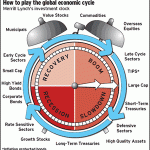
All economies are cyclical. But in recent years the UK economy has been like a baroque town clock – one where a cuckoo pops out every 60 minutes, a peasant girl emerges every four hours to chase the geese, and at midnight the clock face spins wildly around before ending up exactly as it started.
Labour conference? Talk about the working majority and GDP growth, while foisting regulation on business and doing little for economic activity except raising salaries in the public sector.
This article can be read by selected Monevator members. Please see our membership plans and consider joining! Already a member? Sign in here.





Comments on this entry are closed.
Thank you for the thoughtful analysis. I had looked at PSN, as well. The vertically integrated business model and hence cost advantages and first timer buyer appeal (I thought that we might see some gov support again) made it appealing. The many comments of home owners about their shabby build quality less so. Anyway, I wish I had bought before the 15% pop. Seems a repeat story for me: a good idea soon caught up by reality.
Will look more into it again now. Thanks again.
@@annabe Retiree — Thanks for sharing your thoughts. It’s tricky to judge building quality reviews, isn’t it? There seems to always be some homebuilder under the microscope for shoddy work, but I can’t help thinking it’s mostly just down to who has the lens pointed at them at the time. Then again we have far more ability to research this sort of sentiment online these days than 20 years ago, so it’s a good idea to dig into it. I’ll keep in mind! 🙂
Something else to watch with PSN is it’s recently been reinvesting in land. That’s why it’s showing net debt in my little table, although I suspect it will soon reverse this position out of cashflow. It’s a confident move, especially with the market-timing GOATs at Berkeley still sitting on their hands. Then again BKG faces a very different market (and some different challenges) to PSN.
Time will tell. Good luck with turning Wannabe into Newbie Retiree! 🙂
> it can make the upfront costs of buying a bit cheaper for first-time buyers, with a new Help to Buy scheme.
I have never been rich enough to buy a new house. And I was most skint when I bought my first house. The new house premium surely wipes out any amount of government pork? I’ve never heard a decent answer to this – in nearly everything else buying used is cheaper so what’s up with this?
@ermine — I agree many first-time buyers would probably do better not buying a new build home. The issue is some combination of high aspiration and low deposit means they (at least feel) they can’t whereas Help to Buy unlocks a ‘cheaper’ home, and they can effectively amortise the new build premium over the next decade or whatnot.
Remember, most younger (/non-cash) buyers judge what they can buy based on (a) the maximum mortgage they can get (b) the monthly mortgage payment they can conceivably carry. Not realising this reality (especially the latter) kept me bearish far too long on property in the early 2000s. Your First Home’s 20% interest-free (for a bit) loan should help with both, from their POV.
But as I say in the piece, I’m not really here to defend the scheme. I’m here to try to profit from it. 🙂
(We’ll cover the pros and cons from a buyer perspective in a dedicated article after the Budget I hope!)
My main gripe with the whole “build, baby, build” mood is the assumption that infrastructure grows wild, like brambles. Round my way the greenbelt went from sacred to optional overnight (fine, I’m no nimby), and a dozen former fields are now sprouting newbuilds with names like “Meadow View”, presumably in memory of the meadow.
What they’re not sprouting is GP surgeries, nurseries, schools, stores, roads or a single new motorway exit. The plan seems to be that a few thousand extra cars will simply share the one roundabout (about to be built!), taking turns like well-behaved toddlers. Getting a GP appointment is already a national 8am lottery, and they’ve just sold a few thousand more tickets. The nearest school with a free place is in a neighbouring county, possibly a neighbouring decade (I’ve read the report attached to the planning application for the new “Leprechaun Rainbow Park” development which claimed that the birth rates are down across the country, so no need to worry about school places!)
And not even a bloody pub. Thousands of new neighbours, and nowhere to sit with a pint and moan about the traffic. Which, frankly, is the one piece of infrastructure this country actually knows how to build!
@Gudwin — Very fair comment. In the old days (I mean 200 years ago, say) there was a pretty clear incentive for everyone to want their town or city to grow. It meant more wealth, more investment, better roads, more railways, banks and hospitals.
It’s the story of settlers and the Wild West, albeit Albionised in the UK. 😉
Now there’s little to no reason to see why anyone would want more homes built nearby in most cases, unless perhaps it’s explicitly linked to inward investment that seldom seems to happen at a sufficient scale, or if it does then it’s not highlighted.
Perhaps home building is one area where the state should take a more active planning role. “We’re building these new 20,000 homes within this 20 mile catchment area, and for that you’re explicitly getting a new A&E” and/or sports centre or whatnot. Because very few people will get richer like they once did when they get more neighbours. And they may well feel poorer. We need to try to change that at least a bit.
It’s a different story with urban regeneration, gentrification, and brownfield sites of course. Another reason why I’ve long liked Berkeley Group.
Nobody misses a few acres of derelict wasteland with a storage shed full of old leaking toxic chemicals except perhaps moody teenagers and the odd rare and displaced spider.