by The Investor
on September 18, 2009
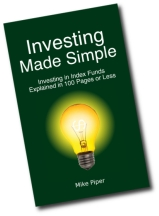
Attention all readers! Bargain alert!
Mike Piper, the author of the excellent blog and book about passive investing, Oblivious Investing, has decided to release his latest 100-page book as a free download.
Quite why Mike is doing us writers out of a job/hobby by releasing such great material for free is another matter, but from your point of view, who cares?
UK readers might get confused with Chapter Two, which is about American tax saving plans. Just substitute Mike’s talk about Roths and 401Ks for our ISAs and pensions — the main point (sheltering from tax is good) is true here too.
Don’t delay, because Mike plans to remove the free option when the book goes on sale in Amazon next month on 1st October.
Thanks for reading! Monevator is a spiffing blog about making, saving, and investing money. Please do sign-up to get our latest posts by email for free. Find us on Twitter and Facebook. Or peruse a few of our best articles.
{ }
by The Investor
on September 17, 2009

As the author of a blog about investing and getting richer, I’m keenly aware that most people who read money blogs are in debt and trying to stop themselves getting poorer.
It’s no coincidence then that the most successful personal finance blogs are about struggles to get out of the red.
Obviously that’s bad news for me, since it means far fewer potential readers of my writing.
But it’s also bad news for these debt-ridden folk.
Investing is like any other positive habit – you need to start investing early and repeat it often to see the benefit. The longer you put it off, the harder it will be to grow a nest egg to replace your salary or enable you to retire early.
With this in mind, here are a few ideas for how cash-strapped surfers who stumble upon Monevator might start investing while funds are low.
[continue reading…]
{ }
by The Investor
on September 12, 2009

My weekly commentary followed by my weekend news and blog links round-up.
I am currently somewhere on the British canal network, helping my mum and dad take a trip on a narrowboat that they’d long thought about doing but never got around to.
Well, I will be if all goes according to plan!
Regular readers may recall my dad suffered a massive heart attack a year ago. It left him physically much diminished and has given his brain a good knock, too.
As I write a few days before the trip, I’m aware of several challenges we’ll face including:
- Getting him on and off the boat (we may only be able to do this once).
- Meals could be challenging (/boring) since we might only eat aboard and the kitchen is tiny if you’re not set up for it. Take-aways ahoy.
- Dad getting too close to the water — it won’t be easy to get him out.
- Me not crashing the boat.
- Dad telling me too insistently that I’m about to crash the boat.
- Mum set on trying to operate the locks, and draining the entire canal system in the process.
- My girlfriend being able to live with all the above, for several days, on a 40-foot boat.
- The great British weather!
[continue reading…]
{ }
by The Investor
on September 10, 2009
We’ve previously looked at how interest payments, other costs and taxes will reduce your expected return if you borrow to invest.
But banking on the stock market to deliver an expected return is risky, even over 20 years — and here ‘expected return’ includes simply “more money than I put in, taking into account interest and charges”.
When we began this series on borrowing to invest, I said that you might see 10% a year from investing your borrowed money into the stock market, before costs.
And it’s true, you might. That’s the long run average return here in the UK and the US, give or take a bit.
But you might easily invest your borrowed money just before a bad spell for shares, and only get 5% a year.
According to my copy of the latest Barclays Capital Equity Gilt Study that I last dusted off when we looked at corporate bond returns, there have been several times over the past 110 years when UK equities have failed to deliver a positive real return on investment over 20 years, let alone their expected return.
At such times, you’ll not break even after costs and charges.
Worse, you might invest at a truly terrible time, and lose a lot of money.
[continue reading…]
{ }



